Preventive Maintenance Saves You Money
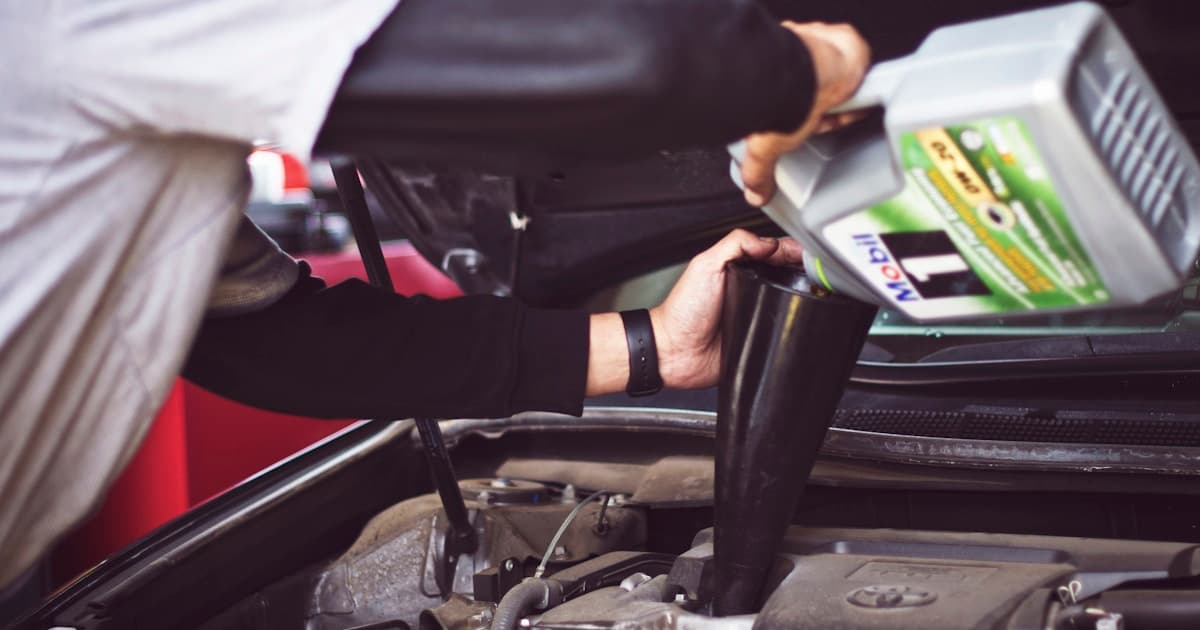
Here is a simple truth about car ownership: a scheduled oil change costs around €50-80. An engine rebuild caused by neglected oil changes costs €3,000-5,000. Preventive maintenance is not an expense — it is insurance against catastrophic repairs.
Yet many car owners drive by feel rather than by schedule. They wait for warning lights, strange noises, or failed inspections before acting. By that point, the damage is done and the bill is significantly higher.
This guide gives you a clear, mileage-based schedule for every major service item. Print it, save it, or — better yet — let an app track it for you automatically.
Understanding Service Intervals
Time vs Mileage
Every service interval has two triggers: mileage and time. The rule is always whichever comes first. If your oil change interval is 15,000 km or 12 months, and you only drive 8,000 km per year, you still change the oil at 12 months.
Why? Because oil degrades chemically over time even when the engine is not running. Moisture accumulates, additives break down, and the oil loses its protective properties.
Manufacturer vs Real-World Intervals
Car manufacturers sometimes specify optimistic service intervals to make ownership costs appear low. A 30,000 km oil change interval looks great in a brochure, but many independent mechanics recommend 15,000-20,000 km for the same engine.
When in doubt, err on the shorter side. The cost difference between a 15,000 km and 20,000 km oil change is trivial compared to the cost of engine wear from degraded oil.
Driving Style Matters
Your actual interval depends on how you drive:
- City driving (frequent stops, short trips, idle time) — reduce intervals by 20-30%. Short trips mean the engine never fully warms up, causing moisture and fuel contamination in the oil
- Highway driving (steady speeds, long distances) — standard intervals are fine
- Cold climate — harder on batteries, oil viscosity, and rubber components
- Towing or heavy loads — increase stress on transmission, brakes, and cooling system
The Complete Service Schedule
Every 10,000-15,000 km (or 12 months)
This is your basic annual service. Every car needs this regardless of age or brand.
- Engine oil and oil filter — the single most important maintenance item. Use the oil grade specified in your owner's manual (e.g., 5W-30, 0W-20)
- Tyre rotation and pressure check — rotating tyres extends their life by 20-30%. Check pressure monthly, including the spare
- Fluid levels — coolant, brake fluid, power steering fluid, windscreen washer
- Wiper blades — inspect for tears and streaking. Replace annually or when visibility drops
- Battery condition — test voltage and check terminals for corrosion. Batteries typically last 4-6 years
- Lights check — all exterior and interior lights functioning correctly
Estimated cost: €80-150
Every 30,000 km (or 2 years)
A more comprehensive service that addresses components with medium wear cycles.
- Air filter replacement — a clogged air filter reduces engine efficiency by up to 10% and increases fuel consumption
- Cabin (pollen) filter replacement — essential for air quality inside the car, especially for allergy sufferers
- Brake inspection — measure pad thickness and disc condition. Front pads typically last 30,000-50,000 km; rears last longer
- Spark plugs (petrol engines) — standard copper plugs every 30,000 km; iridium or platinum plugs every 60,000-100,000 km
- Transmission fluid check — some manufacturers claim "lifetime fill" but many mechanics recommend changing automatic transmission fluid every 60,000-80,000 km for longevity
Estimated cost: €200-400
Every 60,000 km (or 4 years)
Major service territory. These items are critical for long-term reliability.
- Timing belt inspection — if your engine uses a timing belt (not a chain), this is the most critical item. Belts typically need replacement at 60,000-120,000 km depending on the manufacturer. A broken timing belt destroys the engine instantly on interference engines — this is not optional maintenance
- Brake fluid replacement — brake fluid absorbs moisture over time, lowering its boiling point. Old fluid can cause brake fade in heavy braking. Replace every 2-4 years regardless of mileage
- Coolant flush and replacement — old coolant loses its anti-corrosion properties, leading to internal corrosion in the engine and radiator
- Full suspension inspection — check shock absorbers, springs, bushings, and ball joints for wear
- Drive belt (serpentine belt) replacement — drives the alternator, AC compressor, and power steering pump. A broken drive belt leaves you stranded
Estimated cost: €400-800
Every 90,000-120,000 km
High-mileage service that addresses major drivetrain components.
- Timing belt replacement — if not already done at 60,000 km. This is the single most expensive failure if neglected. Always replace the water pump at the same time — it is behind the timing belt and the labour cost is the same
- Clutch inspection (manual transmission) — clutch plates wear with use. Symptoms of a worn clutch: slipping under acceleration, high bite point, difficulty engaging gears
- Water pump replacement — typically replaced together with the timing belt as a preventive measure
- Full brake overhaul — new discs and pads on all four wheels, plus caliper service
- Fuel filter replacement (especially diesel) — critical for diesel engines to protect the injection system
Estimated cost: €600-1,500 (timing belt + water pump alone: €400-800)
Diesel vs Petrol vs Hybrid vs Electric
Diesel Engines
Diesel cars have additional maintenance requirements:
- DPF (Diesel Particulate Filter) — requires periodic regeneration. City-only driving can clog the DPF. An occasional highway drive at sustained revs helps burn off soot
- Fuel filter — replace every 30,000-40,000 km. Water in diesel fuel causes injection system damage
- Glow plugs — replace every 60,000-100,000 km. Symptoms of failure: hard cold starting, rough idle, engine management light
- AdBlue — if equipped, refill as needed (typically every 10,000-15,000 km)
Petrol Engines
- Spark plugs — the main petrol-specific item. Iridium plugs last 60,000-100,000 km
- Ignition coils — inspect when replacing spark plugs. Failed coils cause misfires
- PCV valve — often overlooked, but a failed PCV valve causes oil consumption and rough running
Hybrid Vehicles
- High-voltage battery — monitor battery health through the dealer. Most hybrid batteries last 150,000-200,000 km
- Regenerative braking — means conventional brakes last significantly longer. Pads may last 80,000-100,000 km
- 12V auxiliary battery — hybrids still have a conventional 12V battery that needs periodic replacement
- Coolant — hybrid systems have separate cooling circuits for the battery and motor
Electric Vehicles
Electric cars need significantly less maintenance, but not zero:
- Tyres — EVs are heavier and produce instant torque. Tyres wear faster than on equivalent petrol cars
- Cabin filter — same as any car
- Brake fluid — same degradation over time, even if used less
- Battery coolant — needs periodic replacement
- Software updates — not traditional maintenance, but important for battery management and performance
What Happens When You Skip Services
Real cost examples that demonstrate why prevention beats repair:
| Skipped Service | Consequence | Repair Cost |
|---|---|---|
| Oil change (overdue by 10,000 km) | Sludge buildup, bearing wear | €2,000-4,000 (engine) |
| Timing belt (overdue) | Belt snaps, valves hit pistons | €3,000-5,000 (engine rebuild) |
| Brake fluid (4+ years old) | Brake fade, longer stopping distance | Safety risk + €200-400 |
| Coolant (never changed) | Internal corrosion, head gasket failure | €1,500-3,000 |
| Air filter (clogged) | 10% more fuel consumption | €200-500/year in wasted fuel |
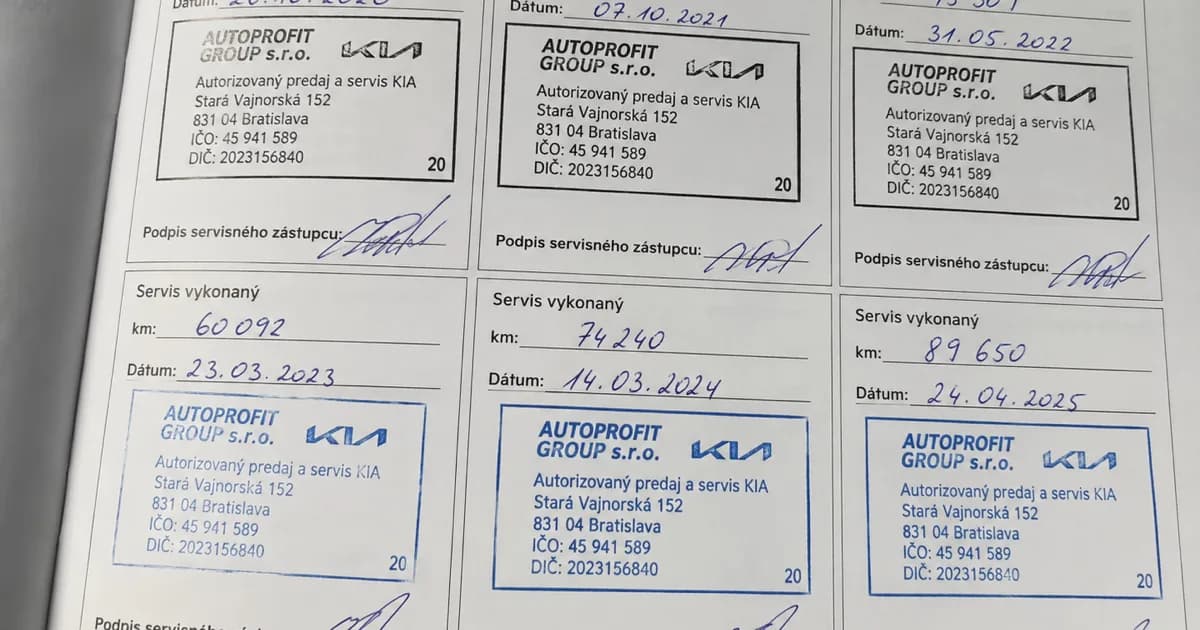
Beyond direct repair costs, a missing service history reduces your car's resale value by 10-20%. Buyers pay more for documented, well-maintained vehicles.
How to Track Your Service Schedule
The traditional paper service book has served car owners for decades, but it has serious limitations: it gets lost, entries are hard to verify, and it cannot remind you when the next service is due.
Car Service Book replaces the paper service book with a smart digital record. Add your car, log every service with date, mileage, and cost, and the app automatically tracks when your next service is due. Set reminders for mileage milestones and date intervals so you never miss critical maintenance.
When it is time to sell, generate a professional PDF report that proves your car's complete maintenance history to potential buyers — increasing their confidence and your selling price.
Your Car's Longevity Starts with a Schedule
Whether you drive a brand new Skoda Kamiq or a fifteen-year-old Golf with 200,000 km, the principles are identical: change fluids on time, replace wear items before they fail, and document everything.
The difference between a car that lasts 150,000 km and one that reaches 300,000 km is rarely the brand or model. It is consistent, timely maintenance by an owner who follows a schedule.
Start tracking your maintenance today — your future self (and your wallet) will thank you.