Fleet Management Is Not Just for Large Companies
When people hear "fleet management," they picture logistics giants with thousands of trucks. But if your business operates 3 vehicles or 30, the principles are identical: control costs, maintain vehicles, protect drivers, and make decisions based on data instead of guesswork.
Small and medium businesses across Central Europe -- delivery services in Prague, construction firms in Krakow, sales teams in Budapest, tradespeople in Bratislava -- rely on vehicles to generate revenue. When a vehicle breaks down unexpectedly, it does not just cost money to repair. It costs the revenue that vehicle would have earned that day.
This guide covers the practical fundamentals of fleet management for businesses that cannot afford a dedicated fleet department.
The True Cost of Running a Fleet
Most business owners know what they spend on fuel and insurance. Far fewer track the complete picture. Here is what fleet costs actually include:
- Acquisition or lease payments
- Fuel and charging costs
- Insurance premiums
- Maintenance and repairs (scheduled and unscheduled)
- Tyres
- Registration, taxes, and road tolls (vignettes, motorway stickers)
- Depreciation
- Administrative time spent managing all of the above
Studies consistently show that maintenance and fuel account for 40--60% of total fleet operating costs. These are also the two categories where small businesses have the most room to improve.
Calculate Your Cost Per Kilometre
Every fleet vehicle should have a known cost per kilometre. The formula is straightforward:
Total annual cost / Total annual kilometres = Cost per km
For a typical company car in Central Europe, this ranges from 0.25 to 0.55 EUR/km depending on the vehicle class and fuel type. Once you know this number for each vehicle, you can make informed decisions about replacements, route planning, and whether a vehicle is earning its keep.
Five Strategies to Reduce Fleet Costs
1. Preventive Maintenance Over Reactive Repairs
An unscheduled repair costs, on average, 3 to 4 times more than the same work done as part of scheduled maintenance. The reason is simple: when something breaks on the road, you pay for the tow, the rush repair, the rental vehicle, and the lost productivity.
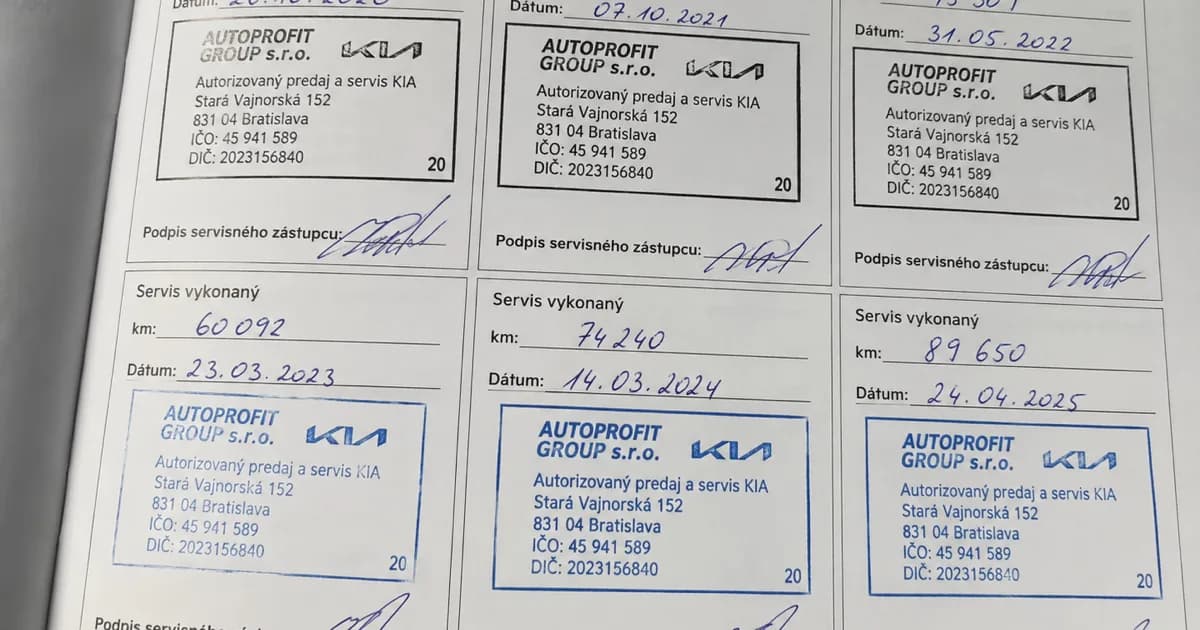
Preventive maintenance means following manufacturer-recommended service intervals and replacing wear components before they fail. The key items to track:
- Engine oil and filter -- every 10,000--15,000 km or annually
- Brake pads and discs -- inspect every 20,000 km, replace as needed
- Tyres -- check tread depth monthly, rotate every 10,000 km
- Timing belt / chain -- follow manufacturer interval precisely (failure is catastrophic)
- Coolant, transmission fluid, brake fluid -- replace at specified intervals
- Battery -- test annually, especially before winter
The challenge for small businesses is tracking these intervals across multiple vehicles. A spreadsheet works for two or three cars but becomes unmanageable as the fleet grows. This is where digital tools make a measurable difference.
2. Standardise Your Fleet
When possible, choose the same make and model (or a narrow range) for your fleet vehicles. Standardisation delivers several advantages:
- Bulk purchasing discounts on vehicles, parts, and tyres
- Reduced training -- drivers and mechanics become familiar with one platform
- Simplified parts inventory -- fewer unique components to stock
- Predictable maintenance costs -- you know exactly what each service costs
For Central European small businesses, the Skoda Octavia, Volkswagen Caddy, Ford Transit, and Dacia Jogger are popular fleet choices due to their low running costs, widespread parts availability, and strong dealer networks.
3. Monitor Fuel Consumption
Fuel is your largest variable cost. Even small improvements compound across a fleet. Practical steps:
- Track fuel purchases per vehicle. Look for outliers -- a vehicle that consistently uses more fuel than identical fleet mates likely has a maintenance issue or a driver behaviour problem.
- Set fuel efficiency benchmarks. For example, if your fleet of Skoda Octavia 2.0 TDIs averages 5.5 L/100 km, investigate any vehicle consistently above 6.5 L/100 km.
- Use fuel cards. They simplify accounting, prevent unauthorized purchases, and provide automatic reporting.
- Consider the EV transition. Electricity costs in Central Europe are currently lower per kilometre than diesel for most urban and suburban use cases. Even adding one or two electric vehicles to a mixed fleet can reduce total fuel spend.
4. Implement a Driver Management Programme
Your drivers are the single biggest variable in fleet performance. The same vehicle driven by two different people can produce wildly different fuel consumption, tyre wear, and accident rates.
A basic driver management programme should include:
- Defined vehicle use policies -- is personal use allowed? What are the reporting procedures for damage?
- Pre-trip vehicle checks -- a simple checklist (lights, tyres, fluids, damage) that takes two minutes and catches problems before they become roadside emergencies
- Fuel-efficient driving training -- smooth acceleration, anticipating traffic, maintaining steady speeds. Studies show eco-driving training reduces fuel consumption by 10--15%.
- Accident and incident reporting -- a clear, simple process that encourages prompt reporting rather than hiding minor damage
5. Plan Vehicle Replacements Strategically
Every vehicle has a total cost of ownership curve. Early in its life, the main cost is depreciation. Later, it shifts to maintenance and repairs. The optimal replacement point is where the rising repair cost line crosses the falling depreciation line.
For most fleet vehicles in Central Europe, this is typically:
- 3--4 years / 120,000--160,000 km for petrol vehicles
- 4--5 years / 150,000--200,000 km for diesel vehicles
- 5--7 years / 150,000--200,000 km for electric vehicles (due to lower maintenance costs)
Selling a fleet vehicle at the right time maximises its resale value and minimises the risk of expensive breakdowns.
How to Track It All Without a Fleet Department
This is the practical challenge. A company with 5--20 vehicles does not have a fleet manager. The responsibility usually falls on an office manager, accountant, or the business owner -- someone who already has a full workload.
The key is to centralize information and automate reminders. You need to know, at a glance:
- When each vehicle's next service is due
- The complete maintenance history of every vehicle
- Current insurance and registration expiry dates
- Total costs per vehicle over time
Digital Fleet Management with Car Service Book
Car Service Book was designed with exactly this use case in mind. The platform lets you:
- Add all fleet vehicles with automatic VIN decoding for accurate specifications
- Log every service, repair, and cost in a structured digital format
- Set maintenance reminders so no service interval is missed across the fleet
- Track costs per vehicle to calculate true cost per kilometre
- Share access with drivers, mechanics, or fleet administrators
- Generate reports for management review or tax documentation
The advantage over spreadsheets is reliability. Reminders fire automatically, data is structured and searchable, and nothing gets lost when someone leaves the company or switches computers.
For businesses operating across Central European borders -- which is common given the region's geography -- having digital records accessible from anywhere eliminates the paperwork chaos of managing vehicles registered or serviced in different countries.
Fleet Compliance in Central Europe
Operating a fleet in Central Europe means navigating several regulatory requirements:
- STK / TK / periodic technical inspections -- mandatory vehicle inspections that vary by country but typically occur every 2 years (annually for commercial vehicles). Missing these makes your vehicle illegal to operate.
- Motorway vignettes -- electronic vignettes are now standard in Czech Republic, Slovakia, Hungary, Austria, and Slovenia. Each must be valid and linked to the correct licence plate.
- Emission zones -- cities like Prague, Krakow, and Vienna have or are introducing low-emission zones. Older diesel vehicles may be restricted.
- Driver licence checks -- you have a legal duty to verify that every employee driving a company vehicle holds a valid licence for that vehicle class.
Track all of these deadlines alongside your maintenance schedule. A single missed inspection can result in fines, insurance invalidation, or a vehicle grounded at the worst possible time.
Start Simple, Then Scale
You do not need to implement everything at once. If your fleet management today consists of a folder of receipts and good intentions, start with three steps:
- Create a digital record for each vehicle. Enter the VIN, mileage, and last known service date.
- Set reminders for the next service, insurance renewal, and technical inspection for every vehicle.
- Start logging fuel purchases per vehicle so you can calculate monthly costs.
These three actions, consistently maintained, will give you more visibility into your fleet than most small businesses in the region have today. From there, you can add driver management, cost analysis, and replacement planning as your fleet grows.
The businesses that manage their vehicles proactively do not just save money. They reduce downtime, improve safety, and make better decisions about when to grow. That is what fleet management really means -- not complexity for its own sake, but practical control over the assets that keep your business moving.