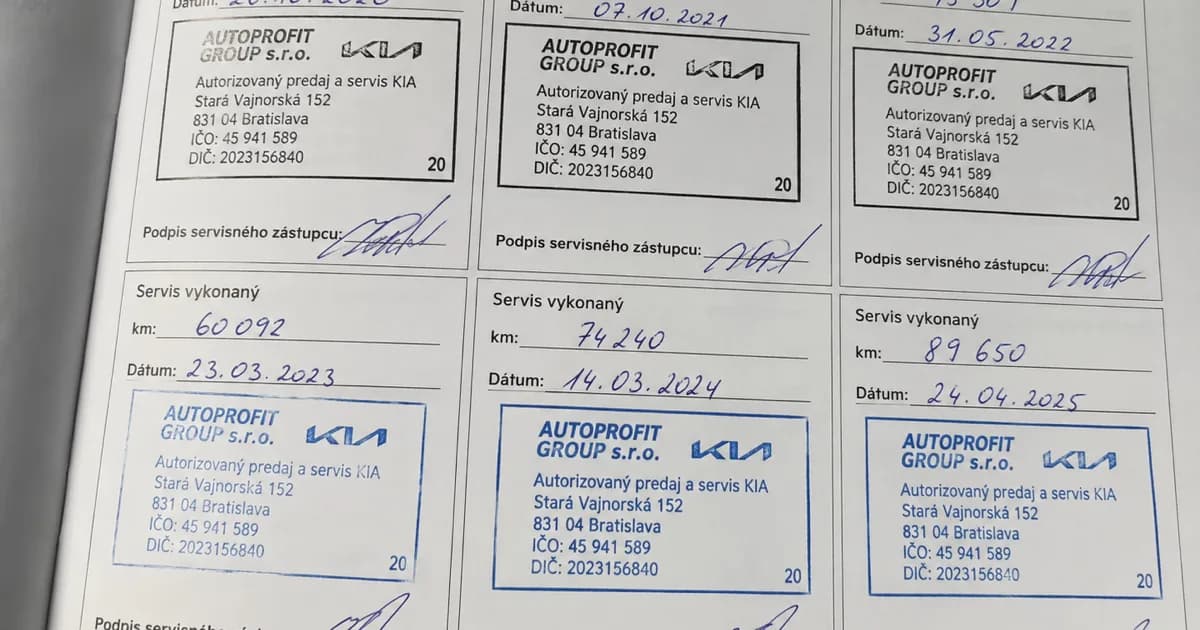
What Is a Car Service Book?
A car service book is the complete maintenance record of a vehicle: every oil change, filter replacement, brake job, and inspection, logged with the date, mileage, and the workshop that did the work. Traditionally, it's a paper booklet supplied with the car, filled in and stamped by whoever services it. Today, it just as often lives inside an app.
The service book is not the same thing as the registration certificate or the technical passport — those documents prove who owns the car and confirm its identity. The service book proves how the car was treated. That distinction matters more than most buyers realize until they're standing in front of a car with no way to verify its history.
What a Complete Service Book Should Contain
A properly maintained service book has, at minimum:
- Every service date and mileage — not just oil changes, but brake work, timing belt replacement, and any repair
- Workshop stamp or signature — proof the work was done by whoever the entry claims, not self-reported
- Parts and fluids used — oil specification, filter part numbers, brake pad brand
- Cost of each service — useful for your own budgeting and for verifying the work matches the price
- Recall and warranty work — confirmation that any manufacturer recall was actually carried out
If any of these are consistently missing, the record is closer to a partial history than a real service book — still useful, but read it with more caution.
Why a Complete Service History Increases Resale Value
Two identical cars, same year, same mileage, same trim — one with a full service history and one without — do not sell for the same price in Germany, Austria, Czechia, Slovakia, or Poland. Dealers and private buyers routinely price a documented service history at several hundred to a few thousand euros above an undocumented one, depending on the car's age and value.
The reason is simple: a service book converts an unknown into a known. A buyer paying for a used car isn't just paying for the metal — they're paying for the risk they're taking on. A complete record lowers that risk, and buyers pay for lower risk.
What It Means When a Car Has No Service Book
"No service book with the car" is one of the most common phrases used car shoppers search for, and for good reason — it's one of the biggest red flags in a private sale. It doesn't automatically mean the car was neglected. Some owners genuinely lose the booklet, or serviced the car themselves without formal records. But you can no longer verify:
- Whether the timing belt was actually replaced at the interval the seller claims
- Whether the mileage on the odometer is consistent with the service history (a mismatch is one of the clearest signs of odometer rollback, a persistent problem in the Central European used car market)
- Whether any manufacturer recall was completed
- How many owners the car has genuinely had
If you're looking at a car with no service book, treat the asking price as a starting point for negotiation, not a fixed number — and lean harder on a mechanical inspection, since you've lost your paper trail. If you haven't done one yet, a used car inspection checklist covers exactly what to check in person, and a quick VIN decode confirms the car's actual make, model, year, and factory specs match what the seller is telling you.
Paper vs. Digital Service Book
A paper service book has one job and does it adequately, as long as nobody loses it, nobody skips an entry, and nobody can quietly leave out a service that would look bad on resale. In practice, all three happen constantly.
A digital service book fixes the structural weaknesses of paper:
| Paper | Digital | |
|---|---|---|
| Can be lost | Yes — permanently | No — stored in the cloud |
| Entries can be skipped unnoticed | Yes | Harder — reminders prompt every interval |
| Survives a change of ownership | Only if physically handed over | Yes, exportable to a new owner |
| Includes receipts and photos | Rarely | Easily attached to each entry |
| Searchable history | No | Yes |
This isn't a knock on paper service books that already exist and are filled in properly — a genuine, complete paper record is still valuable. The problem is what happens when it isn't complete, which is the more common case.
How to Start a Digital Service Book for Your Car
If your car's paper service book is incomplete, lost, or you simply want a more reliable record going forward, starting a digital one takes a few minutes:
- Add your car by VIN. Car Service Book decodes the VIN automatically and fills in the make, model, year, and engine specs, so you start with accurate data rather than typing it in by hand.
- Log every service as it happens — oil changes, fuel-ups, repairs, and expenses, each with mileage and cost.
- Set reminders for the next oil change, inspection, or recurring service, so nothing gets missed going forward even if the old paper trail has gaps.
- Keep the record with the car, not with you — a digital service book that lives in the cloud transfers with a sale far more cleanly than a booklet that has to be physically handed over.
A digital service book doesn't retroactively fix a car's past, but it draws a clean line going forward — and if you're the one selling in a few years, that complete record is what gets you a better price.
Frequently Asked Questions
What is a service book for a car?
A car service book is a chronological record of every maintenance visit a vehicle has had, oil changes, filter replacements, repairs, and inspections, each entry usually stamped or signed by the workshop that performed it, alongside the date and mileage at the time.
What if a car has no service book?
A missing service book doesn't automatically mean the car was never serviced, but it removes your ability to verify what was done, when, and at what mileage. Combined with any other red flag, inconsistent wear for the stated mileage, a recent private sale, or reluctance to answer questions, it's a strong reason to negotiate the price down or walk away.
Is a digital service book as valid as a paper one?
Yes. What matters legally and practically is that the record is complete, dated, and tied to the vehicle, not the medium. A digital service book is harder to lose, can't be selectively left out, and often includes photos and receipts a paper stamp never could.
Can I start a service book for a used car I just bought?
Yes, at any point. If the previous owner's records are incomplete or missing, start logging from your first service onward. You won't recover the car's past history, but every entry from that point on builds a real record for your own use and for whoever buys the car from you next.
The Bottom Line
A car service book is the single document that turns a used car from a guess into a known quantity. Whether paper or digital, a complete one protects the current owner from missing a due service and protects the next buyer from an unpleasant surprise. If you're buying, treat a missing service book as a real cost, not a formality. If you're maintaining your own car, the cheapest insurance you can carry is a record nobody can lose.