What Is a VIN and Why Should You Care?
Every car manufactured since 1981 carries a unique 17-character identifier called a Vehicle Identification Number, or VIN. Think of it as your car's fingerprint -- no two vehicles in the world share the same VIN.
This string of letters and numbers is not random. Each character encodes specific information about where the car was built, who made it, what engine it has, and when it rolled off the production line. Knowing how to read a VIN gives you an advantage whether you are buying a used car, verifying a repair, or simply understanding your own vehicle better.
Where to Find Your VIN
Your VIN appears in several locations. The most common ones:
- Dashboard (driver's side). Look through the windshield at the lower corner of the dashboard on the driver's side. This is the most accessible location.
- Driver's door jamb. Open the driver's door and check the sticker or plate on the door frame. This usually also lists the paint code, tyre pressures, and weight ratings.
- Vehicle registration document. Your VIN is printed on the registration certificate (known as the "technical passport" in many Central European countries).
- Engine bay. Some manufacturers stamp the VIN on the firewall or a structural component under the bonnet.
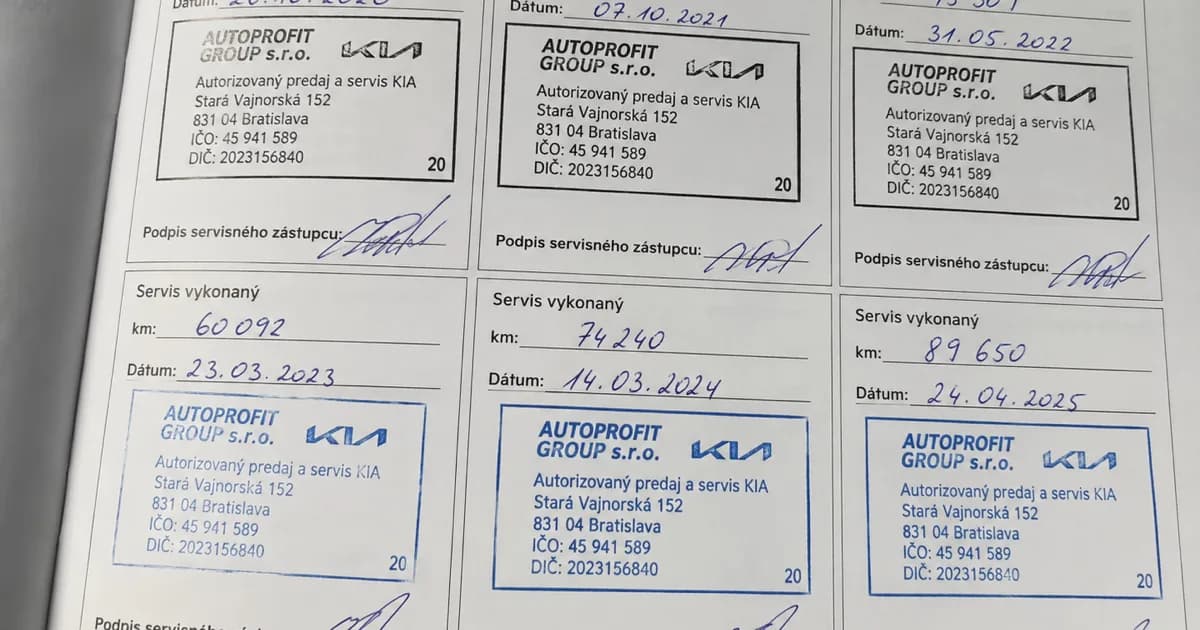
- Insurance documents and service records. Any official document tied to the car should reference the VIN.
Important: When buying a used car, always compare the VIN on the dashboard with the one on the door jamb and registration documents. If they do not match, walk away. Mismatched VINs are a strong indicator of fraud or a rebuilt wreck.
How to Read a VIN: Character by Character
A VIN has exactly 17 characters, divided into three sections. Here is what each position means:
Positions 1--3: World Manufacturer Identifier (WMI)
The first three characters identify the manufacturer and the country of origin.
- Position 1: Country of manufacture. For example: W = Germany, T = Hungary, S = United Kingdom, Z = Italy, V = France or Spain.
- Position 2: Manufacturer. For example: A = Audi, B = BMW (in some contexts), V = Volkswagen.
- Position 3: Vehicle type or manufacturing division.
Common WMI codes you will see in Central Europe:
| WMI | Manufacturer | Country |
|---|---|---|
| WBA | BMW | Germany |
| WVW | Volkswagen | Germany |
| TMB | Skoda | Czech Republic |
| WDD | Mercedes-Benz | Germany |
| WAU | Audi | Germany |
| SUP | Suzuki | Hungary |
| ZFA | Fiat | Italy |
Positions 4--8: Vehicle Descriptor Section (VDS)
These five characters describe the vehicle's specifications:
- Model and body style (sedan, hatchback, SUV)
- Engine type (petrol, diesel, hybrid, electric)
- Transmission type
- Restraint system (airbag configuration)
The exact meaning of each position varies by manufacturer. A VIN decoder tool translates these codes into human-readable information.
Position 9: Check Digit
This is a calculated value used to verify the VIN's authenticity. It helps detect VINs that have been tampered with or incorrectly transcribed.
Position 10: Model Year
This character indicates the year the vehicle was manufactured. The code cycles through letters and numbers:
- A = 2010, B = 2011, ... J = 2018 (I, O, Q are never used)
- K = 2019, L = 2020, M = 2021, N = 2022
- P = 2023, R = 2024, S = 2025, T = 2026
Position 11: Assembly Plant
This character identifies the specific factory where the vehicle was assembled.
Positions 12--17: Production Sequence Number
The final six characters are the vehicle's unique serial number within its production run.
Why VIN Decoding Matters When Buying a Used Car
The used car market in Central Europe -- especially in Germany, Poland, Czech Republic, and Slovakia -- is enormous. Cross-border sales are common, which means a car may have been registered in multiple countries. This is where VIN decoding becomes essential.
Verify the Car's Identity
A VIN decode confirms the exact make, model, engine, and year. Sellers sometimes misrepresent these details, either intentionally or through ignorance. If a listing says "2024 Skoda Octavia 2.0 TDI" but the VIN decodes to a 2022 model with a 1.5 TSI engine, you know something is wrong.
Check for Outstanding Recalls
Manufacturers issue recalls tied to specific VIN ranges. By decoding your VIN and checking with the manufacturer's recall database, you can verify whether any open safety recalls apply to the vehicle -- and whether they have been completed.
Uncover Accident and Service History
Many vehicle history services use the VIN to pull records from insurance databases, service networks, and national registries. In Central Europe, services like CEBIA (Czech Republic), HistoriaPojazdow (Poland), or CarVertical provide VIN-based history reports that can reveal:
- Previous accident damage
- Odometer rollback (a persistent problem in the region)
- Number of previous owners
- Cross-border registration changes
- Outstanding finance or theft flags
Confirm Original Equipment
The VIN can tell you what equipment the car left the factory with. If a seller claims the car has factory navigation or a specific safety package, a VIN decode can confirm or deny that.
How to Decode a VIN for Free
You have several options:
-
Car Service Book's free VIN decoder tool. Paste any 17-character VIN and get the make, model, year, engine, and factory specs instantly -- no account, no signup.
-
Car Service Book's built-in VIN decoder. When you add a vehicle to Car Service Book, the app automatically decodes your VIN and populates your car's details -- make, model, year, engine, and specifications. This saves time and ensures accuracy in your digital service book from the start.
-
Manufacturer websites. Many manufacturers (BMW, Volkswagen, Mercedes-Benz) offer VIN lookup tools on their official websites, particularly for recall checks.
-
National vehicle registries. Some countries provide basic VIN checks through government portals. Availability varies across Central Europe.
-
Third-party VIN decoders. Websites like NHTSA (for US-spec vehicles) or the European ETAX database provide free basic decoding.
Common VIN Mistakes to Avoid
When working with VINs, watch out for these common errors:
- Confusing similar characters. VINs never contain the letters I, O, or Q because they look like 1, 0, and 9. If you see one of these letters, the VIN is either wrong or fake.
- Incomplete VINs. A valid VIN is always exactly 17 characters. Older vehicles (pre-1981) may have shorter identifiers, but any car from the last 45 years must have 17.
- Ignoring the check digit. Position 9 is a mathematical verification. Professional VIN decoders validate this automatically. If the check digit does not match, the VIN has been altered.
VIN Decoder Quick Reference
Here is a summary you can save for your next used car inspection:
| Position | What It Tells You |
|---|---|
| 1 | Country of manufacture |
| 2 | Manufacturer |
| 3 | Vehicle type / division |
| 4--8 | Model, engine, body, transmission |
| 9 | Check digit (anti-fraud) |
| 10 | Model year |
| 11 | Assembly plant |
| 12--17 | Unique serial number |
Protect Yourself with Knowledge
A VIN is the most reliable piece of information attached to any vehicle. It cannot be changed without leaving evidence, and it connects to databases that span countries and decades. Whether you are buying your first used car, managing a fleet, or simply keeping accurate maintenance records, understanding how to read and verify a VIN puts you in a stronger position.
Next time you look at a car -- whether on a dealer lot in Bratislava, a classifieds listing in Warsaw, or your own driveway -- take 30 seconds to decode the VIN. The information it reveals might surprise you.